
Becoming a Movement Detective 7 of 7: The Myth of the Magic Bullet: When One-Target Thinking Falls Short and A Detective’s Approach to Pain and Pattern | #380
In this final episode of the Movement Detective series, I explore why persistent pain and complex movement challenges often don’t fit the traditional “magic bullet” model of finding one cause and one solution. Instead, I share why developing the skills of observation, curiosity, and pattern recognition can help us better understand what our bodies are […]
Becoming a Movement Detective 2/7: Forcing Outcomes | #375
In this episode, I explore the concept of “forcing outcomes” and how it subtly shows up in healing, movement, and therapeutic work. I unpack how the desire to fix, improve, or succeed can lead us to override the body’s feedback—ultimately slowing down the very progress we’re trying to achieve. I also break down the key […]
Pain Science Explained Pain… So… Now, What Does A Person DO? How Does A Teacher Teach? | #373
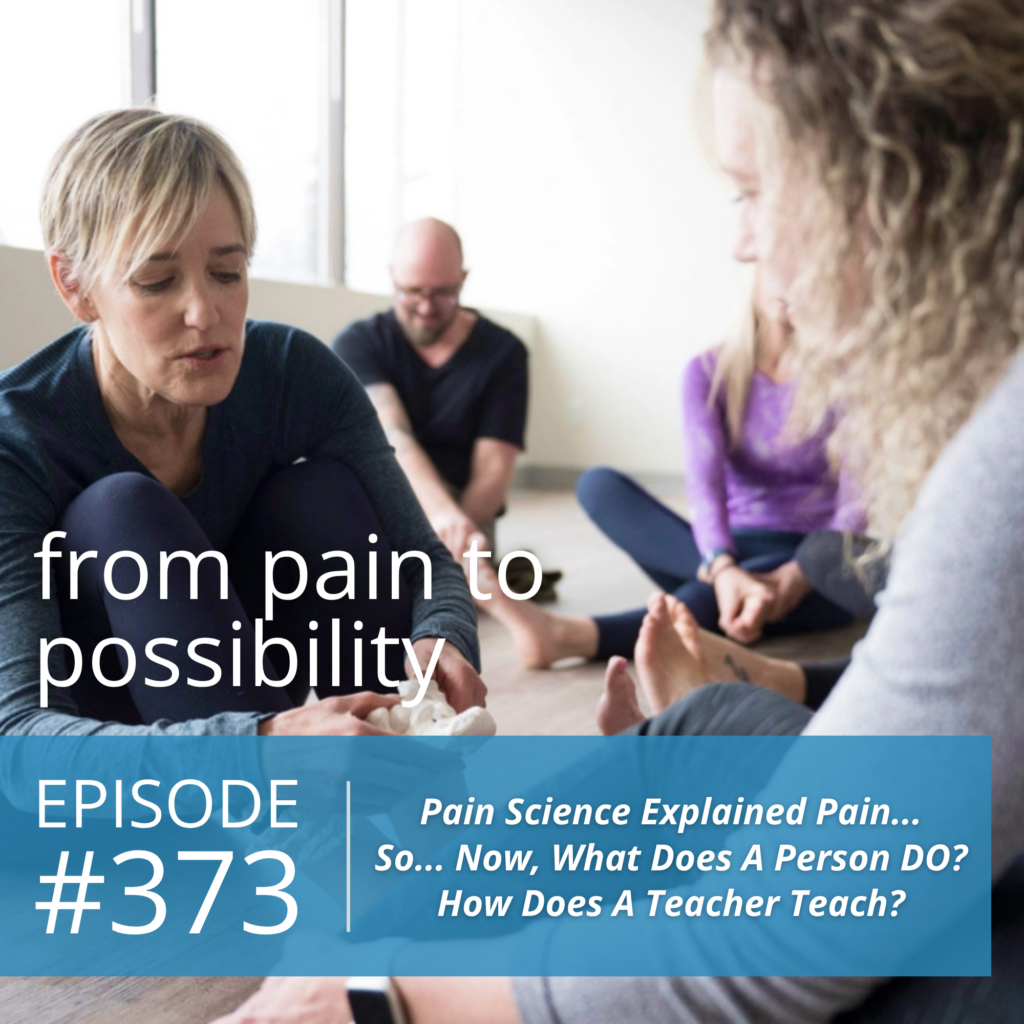
In this episode, I explore the evolution of pain understanding—from a structural, tissue-based model to the introduction of pain science—and what both perspectives miss when it comes to real-life recovery. I share how earlier beliefs around degeneration, alignment, and “damage equals pain” shaped fear-based movement, and how pain science helped reframe pain as a protective […]
Muscles Vs. Segments | #371

In this episode, I introduce a concept that has been reshaping the way I work with clients and train teachers: moving beyond a muscle-focused approach and learning to observe how the body actually coordinates movement. I talk about why trying to “fix” tight or weak muscles can sometimes lead to confusion and limited results, and […]
Become a Movement Detective: Rethinking Neck Pain | #370
In this episode, I invite you to rethink neck pain by becoming a movement detective. Instead of focusing only on where the pain is, I explore how the body works as an interconnected system and why the neck often takes on more work than it’s designed to do. I share how compensation patterns form and […]